
UpCircle Beauty: Upcycling as a Beauty Standard
Sophia, The LuxEco Edit
1/14/20264 min read
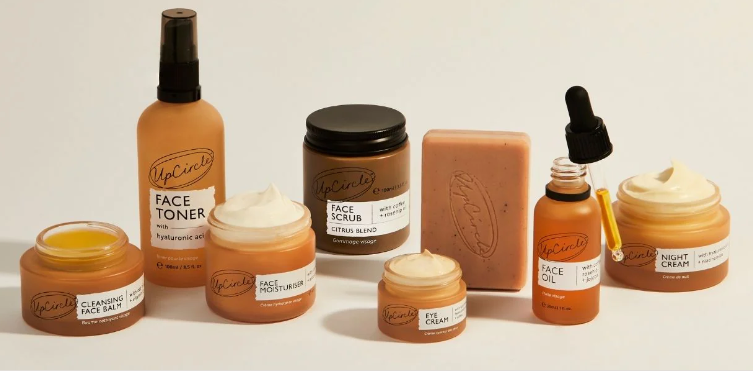
Sustainability in beauty is often framed as a future promise — what brands intend to improve, what materials will change, what systems might become cleaner. UpCircle Beauty begins somewhere more immediate. Its sustainability story starts with what already exists: waste.
Founded in the UK, UpCircle Beauty is built around a straightforward but quietly radical idea. Discarded materials still have value. Instead of sourcing new raw ingredients, the brand works with by-products from other industries and turns them into functional skincare. In doing so, UpCircle reframes sustainability not as reduction alone, but as redirection.
From Waste Stream to Skincare Ingredient
At the core of UpCircle Beauty is upcycling. Coffee grounds collected from cafés, fruit stones left over from food production, and unused botanical by-products are transformed into scrubs, oils, and balms. These ingredients are not chosen for symbolism. They are selected for what they can actually do.
Coffee grounds provide gentle exfoliation and antioxidant benefits. Fruit stones create natural texture without relying on synthetic microbeads. Oils extracted from otherwise discarded seeds retain nourishing fatty acids. Function comes first. Story follows.
This upstream approach to sustainability reflects a broader behavioural insight explored in Why Christmas Makes Us Buy Too Much Beauty, where environmental impact is often determined long before a product reaches the shelf — shaped by systems and habits rather than packaging alone.
By intervening earlier in the supply chain, UpCircle reduces waste before it becomes a consumer-facing problem. The result is sustainability that feels structural, not performative.
A Formulation Philosophy That Resists Excess
UpCircle’s product range is deliberately restrained. Instead of encouraging complex, multi-step routines, the brand focuses on versatility. A face scrub that can also be used on the body. An oil that works across skin types. A cleansing balm that replaces multiple products.
This restraint aligns closely with the principles outlined in Slow Beauty Explained: Embracing Sustainable Skincare, where sustainability is framed as something that must fit into real routines to last. Fewer products, clearer roles, and longer use are not aesthetic choices — they are practical ones.
When routines are easier to follow, products are more likely to be finished. This is one of the most overlooked aspects of sustainable beauty: unused product is waste, regardless of how responsibly it was formulated.
Ingredient fatigue has become a defining issue in modern skincare. More actives, stronger formulas, and faster promises often lead to irritation — and unnecessary replacement cycles. As discussed in Mineral Sunscreens in 2025: Transparent, Clean, Inclusive, innovation does not always equal improvement. In many cases, restraint delivers better outcomes for both skin and sustainability.
UpCircle’s low-intensity formulations reflect this quieter direction. Products are designed to be lived with, not optimised to impress at first use.
Packaging as Continuation, Not Afterthought
UpCircle’s circular thinking extends beyond ingredients. Packaging choices are intentionally simple: glass jars, aluminium lids, and minimal plastic where alternatives are not viable. Refill options exist where repeat use is realistic, not forced.
The brand also operates a return scheme for empty packaging, reinforcing the idea that sustainability is ongoing rather than transactional. This matters because refill culture only works when it aligns with behaviour people already have.
As explored in Why Christmas Makes Us Buy Too Much Beauty, sustainability often fails when it relies on ideal behaviour. It works when systems are designed around what people will realistically do.
UpCircle’s packaging strategy succeeds because it assumes consistency, not perfection.
Who UpCircle Is — and Isn’t — For
UpCircle Beauty does not position itself as luxury skincare, nor does it attempt to replace clinical or dermatological treatments. Instead, it occupies a practical middle ground: functional, ethical, and accessible.
This positioning resonates with a recurring Beauty Lens insight — sustainability lasts longer when it fits into existing habits rather than demanding complete lifestyle change. UpCircle does not ask consumers to be ideal. It simply offers better defaults.
That clarity also means the brand will not appeal to everyone. Those seeking high-strength actives or rapid, visible transformation may find UpCircle understated. Its value lies in consistency, not intensity. This honesty strengthens trust rather than limiting appeal.
Key Products Worth Knowing
From both a consumer and affiliate perspective, UpCircle’s hero products act as accessible entry points:
Coffee Face Scrub — gentle exfoliation using repurposed coffee grounds
Face Oil with Coffee Oil — lightweight nourishment suitable for daily use
Cleansing Face Balm — effective makeup removal with minimal ingredients
These products integrate easily into existing routines and are frequently repurchased, making them well suited for long-term recommendation rather than one-off promotion.
Why UpCircle Still Matters in 2026
UpCircle Beauty’s relevance lies in coherence. Sustainability is not treated as a campaign layer but as an operating system. Sourcing, formulation, and packaging follow the same logic.
In an industry driven by constant launches and novelty, this steadiness feels almost countercultural. Yet it may be precisely what allows sustainable beauty to endure as expectations rise.
UpCircle demonstrates that sustainability does not need to look futuristic to be effective. Sometimes it simply needs to be practical.
Editorial Reflection: When Sustainability Starts Before the Shelf
UpCircle Beauty reminds us that the most meaningful sustainability decisions often happen long before a product reaches the consumer. By working upstream — with waste, with by-products, with overlooked materials — the brand reframes impact as prevention rather than repair.
In a beauty industry obsessed with what is new, UpCircle’s strength lies in reconsideration. Not what else can be created, but what can be used better.
As sustainability shifts from aspiration to expectation, brands like UpCircle show that progress does not need to be loud. It only needs to be built into the system from the start.
